
Introduction
Content Sliding website is one of the famous and creative design techniques for portfolio website. One thing, please make sure you put the menu on every single page to avoid confusion/dizziness.
- You should put the navigation menu in every single page
- Or, fix the position of the menu
- Let your visitors know exactly what section they're reading, like highlight the selected menu item and have a clear title
In this tutorial, we will learn to scroll your web content vertically, horizontally and plus diagonally! Don't worry, we won't rely on javascript too much, we will use css/html for the layout and javascript only do the scrolling. And hey, it will still work even if your browser doesn't support javascript.
And, thanks to Ariel Flesler, his scrollTo plugin is simply amazing!
1. HTML
Depend on which direction you want to scroll your website, each of them have slightly different layout. For the horizontal and vertical, they use the same layout, whereas for diagonal, you have to add extra div to create the "diagonal". It sounds like a dirty trick, but hey, it works! :)
I put <a name="name"></a>, just in case some of the browsers out there don't support javascript.
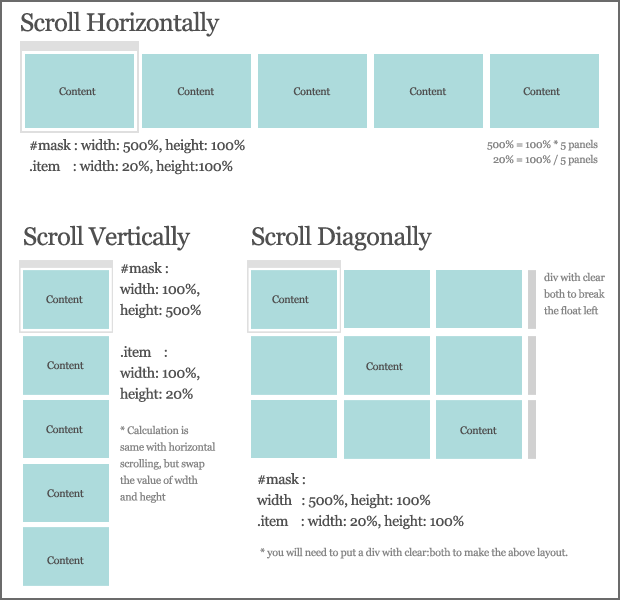
Scroll Horizontally & Vertically
<div id="wrapper">
	<div id="mask">

		<div id="item1" class="item">
			<a name="item1"></a>
			<div class="content">item1
				<a href="#item1" class="panel">1</a> |
				<a href="#item2" class="panel">2</a> |
				<a href="#item3" class="panel">3</a> |
				<a href="#item4" class="panel">4</a> |
				<a href="#item5" class="panel">5</a>
			</div>
		</div>

		<div id="item2" class="item">
			<a name="item2"></a>
			<div class="content">item2 <a href="#item1" class="panel">back</a></div>
		</div>

		<div id="item3" class="item">
			<a name="item3"></a>
			<div class="content">item3 <a href="#item1" class="panel">back</a></div>
		</div>

		<div id="item4" class="item">
			<a name="item4"></a>
			<div class="content">item4 <a href="#item1" class="panel">back</a></div>
		</div>

		<div id="item5" class="item">
			<a name="item5"></a>
			<div class="content">item5 <a href="#item1" class="panel">back</a></div>
		</div>

	</div>
</div>

<div id="wrapper">
	<div id="mask">

		<!-- first row -->

		<div id="item1" class="item">
			<a name="item1"></a>
			<div class="content">item1
				<a href="#item1" class="panel">1</a> |
				<a href="#item2" class="panel">2</a> |
				<a href="#item3" class="panel">3</a>
			</div>
		</div>

		<div class="item"></div>
		<div class="item"></div>
		<div class="clear"></div>

		<!-- second row -->

		<div class="item"></div>

		<div id="item2" class="item">
			<a name="item2"></a>
			<div class="content">item2 <a href="#item1" class="panel">back</a></div>
		</div>

		<div class="item"></div>
		<div class="clear"></div>

		<!-- third row -->

		<div class="item"></div>
		<div class="item"></div>

		<div id="item3" class="item">
			<a name="item3"></a>
			<div class="content">item3 <a href="#item1" class="panel">back</a></div>
		</div>

		<div class="clear"></div>

	</div>
</div>
<div id="wrapper">
	<div id="mask">

		<div id="item1" class="item">
			<a name="item1"></a>
			<div class="content">item1
				<a href="#item1" class="panel">1</a> |
				<a href="#item2" class="panel">2</a> |
				<a href="#item3" class="panel">3</a> |
				<a href="#item4" class="panel">4</a> |
				<a href="#item5" class="panel">5</a>
			</div>
		</div>

		<div id="item2" class="item">
			<a name="item2"></a>
			<div class="content">item2 <a href="#item1" class="panel">back</a></div>
		</div>

		<div id="item3" class="item">
			<a name="item3"></a>
			<div class="content">item3 <a href="#item1" class="panel">back</a></div>
		</div>

		<div id="item4" class="item">
			<a name="item4"></a>
			<div class="content">item4 <a href="#item1" class="panel">back</a></div>
		</div>

		<div id="item5" class="item">
			<a name="item5"></a>
			<div class="content">item5 <a href="#item1" class="panel">back</a></div>
		</div>

	</div>
</div>

<div id="wrapper">
	<div id="mask">

		<!-- first row -->

		<div id="item1" class="item">
			<a name="item1"></a>
			<div class="content">item1
				<a href="#item1" class="panel">1</a> |
				<a href="#item2" class="panel">2</a> |
				<a href="#item3" class="panel">3</a>
			</div>
		</div>

		<div class="item"></div>
		<div class="item"></div>
		<div class="clear"></div>

		<!-- second row -->

		<div class="item"></div>

		<div id="item2" class="item">
			<a name="item2"></a>
			<div class="content">item2 <a href="#item1" class="panel">back</a></div>
		</div>

		<div class="item"></div>
		<div class="clear"></div>

		<!-- third row -->

		<div class="item"></div>
		<div class="item"></div>

		<div id="item3" class="item">
			<a name="item3"></a>
			<div class="content">item3 <a href="#item1" class="panel">back</a></div>
		</div>

		<div class="clear"></div>

	</div>
</div>
Scroll Diagonally
<div id="wrapper">
	<div id="mask">

		<div id="item1" class="item">
			<a name="item1"></a>
			<div class="content">item1
				<a href="#item1" class="panel">1</a> |
				<a href="#item2" class="panel">2</a> |
				<a href="#item3" class="panel">3</a> |
				<a href="#item4" class="panel">4</a> |
				<a href="#item5" class="panel">5</a>
			</div>
		</div>

		<div id="item2" class="item">
			<a name="item2"></a>
			<div class="content">item2 <a href="#item1" class="panel">back</a></div>
		</div>

		<div id="item3" class="item">
			<a name="item3"></a>
			<div class="content">item3 <a href="#item1" class="panel">back</a></div>
		</div>

		<div id="item4" class="item">
			<a name="item4"></a>
			<div class="content">item4 <a href="#item1" class="panel">back</a></div>
		</div>

		<div id="item5" class="item">
			<a name="item5"></a>
			<div class="content">item5 <a href="#item1" class="panel">back</a></div>
		</div>

	</div>
</div>

<div id="wrapper">
	<div id="mask">

		<!-- first row -->

		<div id="item1" class="item">
			<a name="item1"></a>
			<div class="content">item1
				<a href="#item1" class="panel">1</a> |
				<a href="#item2" class="panel">2</a> |
				<a href="#item3" class="panel">3</a>
			</div>
		</div>

		<div class="item"></div>
		<div class="item"></div>
		<div class="clear"></div>

		<!-- second row -->

		<div class="item"></div>

		<div id="item2" class="item">
			<a name="item2"></a>
			<div class="content">item2 <a href="#item1" class="panel">back</a></div>
		</div>

		<div class="item"></div>
		<div class="clear"></div>

		<!-- third row -->

		<div class="item"></div>
		<div class="item"></div>

		<div id="item3" class="item">
			<a name="item3"></a>
			<div class="content">item3 <a href="#item1" class="panel">back</a></div>
		</div>

		<div class="clear"></div>

	</div>
</div>
<div id="wrapper">
	<div id="mask">

		<div id="item1" class="item">
			<a name="item1"></a>
			<div class="content">item1
				<a href="#item1" class="panel">1</a> |
				<a href="#item2" class="panel">2</a> |
				<a href="#item3" class="panel">3</a> |
				<a href="#item4" class="panel">4</a> |
				<a href="#item5" class="panel">5</a>
			</div>
		</div>

		<div id="item2" class="item">
			<a name="item2"></a>
			<div class="content">item2 <a href="#item1" class="panel">back</a></div>
		</div>

		<div id="item3" class="item">
			<a name="item3"></a>
			<div class="content">item3 <a href="#item1" class="panel">back</a></div>
		</div>

		<div id="item4" class="item">
			<a name="item4"></a>
			<div class="content">item4 <a href="#item1" class="panel">back</a></div>
		</div>

		<div id="item5" class="item">
			<a name="item5"></a>
			<div class="content">item5 <a href="#item1" class="panel">back</a></div>
		</div>

	</div>
</div>

<div id="wrapper">
	<div id="mask">

		<!-- first row -->

		<div id="item1" class="item">
			<a name="item1"></a>
			<div class="content">item1
				<a href="#item1" class="panel">1</a> |
				<a href="#item2" class="panel">2</a> |
				<a href="#item3" class="panel">3</a>
			</div>
		</div>

		<div class="item"></div>
		<div class="item"></div>
		<div class="clear"></div>

		<!-- second row -->

		<div class="item"></div>

		<div id="item2" class="item">
			<a name="item2"></a>
			<div class="content">item2 <a href="#item1" class="panel">back</a></div>
		</div>

		<div class="item"></div>
		<div class="clear"></div>

		<!-- third row -->

		<div class="item"></div>
		<div class="item"></div>

		<div id="item3" class="item">
			<a name="item3"></a>
			<div class="content">item3 <a href="#item1" class="panel">back</a></div>
		</div>

		<div class="clear"></div>

	</div>
</div>
2. CSS
The CSS is basically almost the same with the tabbed based content slider tutorial. I have illustrated how it works in that tutorial, so you might wanna check that out as well.
Scroll Horizontally & Diagonally
Â
- #mask : height=100%, width = 100% * total of items
- .item : height=100%, width = 100% / total of items
body {
	height:100%;
	width:100%;
	margin:0;padding:0;
}

#wrapper {
	width:100%;
	height:100%;
	position:absolute;
	top:0;left:0;
	background-color:#ccc;
	overflow:hidden;
}

	#mask {
		width:500%;
		height:100%;

		background-color:#eee;
	}

	.item {
		width:20%;
		height:100%;
		float:left;
		background-color:#ddd;
	}


	.content {
		width:400px;
		height:300px;
		top:20%;
		margin:0 auto;
		background-color:#aaa;
		position:relative;
	}

	.selected {
		background:#fff;
		font-weight:700;
	}

	.clear {
		clear:both;
	}
Scroll Vertically
The width and height are opposite from scrolling horizontally. Calculations are:
- #mask : width=100%, height = 100% * total of items
- .item : width=100%, height = 100% / total of items
	#mask {
		width:100%;
		height:500%;
		background-color:#eee;
	}

	.item {
		width:100%;
		height:20%;
		float:left;
		background-color:#ddd;
	}
3. Javascript
So, you must be thinking how complicated the javascript would be. You'll be surprise! its only a line of code to make the scrolling effect. Thanks to jquery.scrollTo Plugin. What we have to do is solve the layout using css/html, and the plugin will do the rest.
$(document).ready(function() {

	//get all link with class panel
	$('a.panel').click(function () {

                //reset and highlight the clicked link
		$('a.panel').removeClass('selected');
		$(this).addClass('selected');

		//grab the current item, to be used in resize function
		current = $(this);

                //scroll it to the destination
		$('#wrapper').scrollTo($(this).attr('href'), 800);

                //cancel the link default behavior
		return false;
	});


	//resize all the items according to the new browser size
	$(window).resize(function () {

		//call the resizePanel function
		resizePanel();
	});

});
This resize function have 2 versions. One for vertical and another for both horizontal and diagonal. The only difference is the mask_height and mask_width.
Verticalfunction resizePanel() {
//get the browser width and height
width = $(window).width();
height = $(window).height();
//get the mask height: height * total of items
mask_height = height * $('.item').length;
//set the dimension
$('#wrapper, .item').css({width: width, height: height});
$('#mask').css({width: width, height: mask_height});
//if the item is displayed incorrectly, set it to the corrent pos
$('#wrapper').scrollTo($('a.selected').attr('href'), 0);
}
Horizontal & Diagonal
function resizePanel() {

	//get the browser width and height
	width = $(window).width();
	height = $(window).height();

	//get the mask width: width * total of items
	mask_width = width * $('.item').length;

	//set the dimension
	$('#wrapper, .item').css({width: width, height: height});
	$('#mask').css({width: mask_width, height: height});

	//if the item is displayed incorrectly, set it to the corrent pos
	$('#wrapper').scrollTo($('a.selected').attr('href'), 0);

}
Conclusion
That's it, simple and easy! I hope you all will enjoy it.
Last but not least, I need your support :) If you like this article, please help me to promote it by adding this post into your bookmark. You can subscribe to my RSS for more jQuery tutorial posts! Or go to my website footer to follow me on twitter, and buy me a drink! Thanks!
Jump to Certain Item on Page Load
This is one of the most popular request. A lot of people want this content slider to display certain item on page load. It's simple, you need to use this:
$(document).ready(function () {

   $('#wrapper').scrollTo('ITEM-ID-HERE', 0);

   ......
   ......
   ......
}
With that line of code, the slider will jump to the item on page load.

Comments will be moderated and
rel="nofollow"will be added to all links. You can wrap your coding with[code][/code]to make use of built-in syntax highlighter.@Amoury: you seem to have fixed the issue by urself :)
Only when the page is first loaded and the screen is resized does the box start floating around, as soon as you click any of the other links, it corrects itself. You can try it by adding that line in your tutorial or by viewing the website im working on www.g3content.com . Let me know if you have any suggestions, Thanks a lot for your time!
Great script and works like a charm, but I want it to bring it a step further by giving it back button and boomark support, so I'm trying to implement the bbq plugin. I copied the basic function example, but no luck so far.
I've used this bbq function:
http://benalman.com/code/projects/jquery-hashchange/examples/hashchange
Here is my test site:
http://benalman.com/code/projects/jquery-hashchange/examples/hashchange
What do I have to change to make it work?
Thanks in advance!
On page load, run this script and it will move the page to item2
$('#wrapper').scrollTo($('#item2'), 0);
//scroll it to the destination
$('#wrapper').scrollTo($(this).attr('href'), 800);
and change to:
//scroll it to the destination
$('#wrapper').scrollTo($(this).attr('href'), 800, {easing:'easeInOutElastic'});
currently i have 5 vertical's and need to add 5 more
please show me the code. thanks -bill
<div id="item2" class="item">
<a name="item2"></a>
<div class="content">Put your content right here...<a href="#item1" class="panel">back</a></div>
</div>
I need 8 but when I add 3 more to the 5 it does no work ?
how can I fix this ?
thanks -bill
#mask {
width:100%;
height:500%;
background-color:#eee;
}
That mask is set based on the browser's width and height, so no matter how wide you set your content, it will be cut off.
I see you've addresses this long ago but I can't make it work.
I'm confused because the solution you provide is not in the code that I have. EG:
This is the code I have for horizontal scroll
#mask {
width:500%;
height:100%;
background-color:#eee;
}
.item {
width:20%;
height:100%;
float:left;
background-color:#ddd;
Here is the code you suggested for 6 items. How do I make the code I have (above) work?
#mask : height=100%, width = 100% * total of items
.item : height=100%, width = 100% / total of items
Thank you again you have saved me LOTS of time.
Joe
http://www.TodayIsWhen.com
This tutorial is awesome.. but i have one small query... this menu always gets aligned to center of the page... is it possible to have it at any other position say left of the screen?